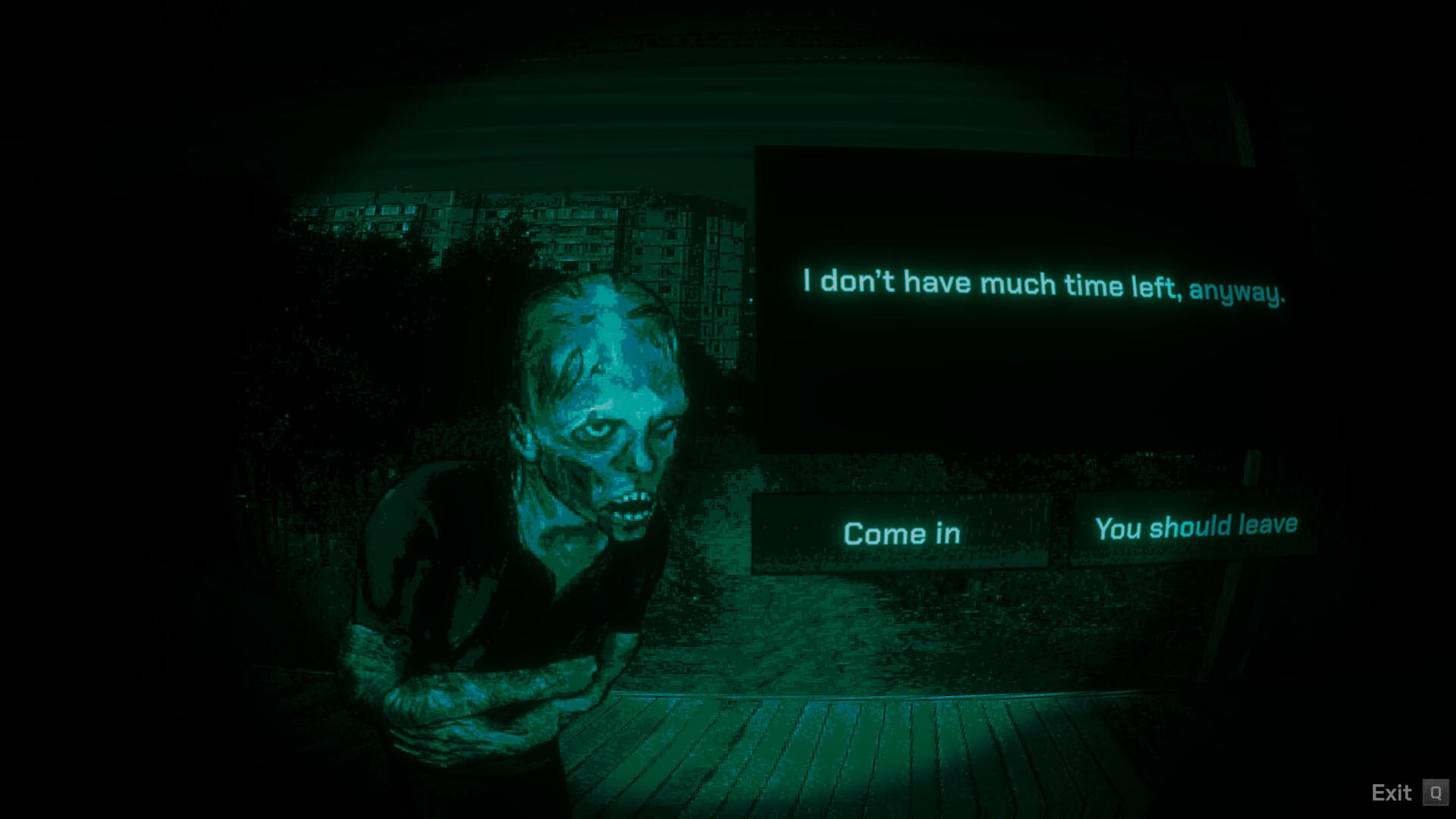
No, I'm Not a Human excels not just in its gameplay mechanics, but in its masterful character design and psychological depth. Each of the 57 characters represents a carefully crafted study in human psychology, fear, and the uncanny valley effect. This analysis explores the psychological elements that make these characters so compelling and terrifying.
The Psychology of the Uncanny Valley
The game's visitors are designed to exploit the uncanny valley effect - the psychological phenomenon where things that are almost, but not quite, human create feelings of revulsion and fear. The developers have masterfully crafted characters that are just human enough to be recognizable, but with subtle differences that trigger our primal fear responses.
Key Psychological Triggers
- Unnatural Perfection: Visitors often have features that are too perfect or symmetrical
- Subtle Deformities: Small physical differences that feel "off"
- Behavioral Inconsistencies: Actions that don't match human emotional responses
- Knowledge Gaps: Visitors may know too much or too little about human experiences
Character Archetypes and Their Psychological Impact
The Authority Figure (FEMA Agent)
This character exploits our natural trust in authority figures. The psychological manipulation here is subtle - we're conditioned to trust people in uniforms, making the betrayal more impactful when we discover their true nature.
Psychological Impact: Challenges our basic assumptions about safety and authority, creating a sense of betrayal and vulnerability.
The Vulnerable (Wounded Man, Mother with Child)
These characters play on our natural empathy and protective instincts. The game forces us to question whether our compassion is a strength or a weakness in a post-apocalyptic world.
Psychological Impact: Creates internal conflict between our moral compass and survival instincts, leading to guilt and self-doubt.
The Charismatic Leader (Cult Leader, Prophet)
These characters represent the danger of blind faith and charismatic authority. They exploit our need for hope and meaning in a chaotic world.
Psychological Impact: Challenges our critical thinking abilities and forces us to question the nature of leadership and belief.
The Professional (Surgeon, Cashier)
These characters represent the familiar and safe - people we encounter in our daily lives. Their potential as visitors is particularly unsettling because it suggests that nowhere is truly safe.
Psychological Impact: Destroys our sense of normalcy and makes us question the safety of everyday interactions.
The Psychology of Decision-Making Under Pressure
The game's time pressure and resource management create a psychological environment that mirrors real-world stress responses. Players must make life-or-death decisions while managing limited energy and resources, which can lead to:
- Cognitive Overload: Too much information to process effectively
- Decision Fatigue: Each choice becomes more difficult as mental resources are depleted
- Paranoia: The constant threat of infiltration can lead to excessive suspicion
- Moral Compromise: Pressure to survive may override ethical considerations
Character Design Psychology
The visual design of each character is carefully crafted to trigger specific psychological responses:
Color Psychology
- Red Eyes: Associated with danger, aggression, and the supernatural
- Pale Skin: Suggests illness, death, or unnatural origins
- Perfect Teeth: Too white or too perfect, suggesting artificiality
- Unnatural Hair: Colors or textures that don't occur naturally
Body Language and Movement
- Too Smooth Movements: Suggests artificial or mechanical behavior
- Inappropriate Reactions: Emotional responses that don't match the situation
- Unnatural Postures: Body positions that seem uncomfortable or forced
- Eye Contact: Either too intense or completely avoiding eye contact
The Psychology of Trust and Betrayal
The game's core mechanic of identifying humans vs. visitors is fundamentally about trust. This creates a psychological environment where:
- Every Interaction is Suspicious: Players must constantly evaluate the trustworthiness of others
- False Positives Create Guilt: Rejecting a human creates moral distress
- False Negatives Create Fear: Accepting a visitor creates vulnerability
- Social Isolation: Constant suspicion can lead to withdrawal and paranoia
The Psychology of Multiple Endings
The game's 10 different endings reflect different psychological approaches to the central dilemma:
Paranoid Endings
These endings result from excessive suspicion and isolation. They reflect the psychological cost of constant vigilance and the fear of betrayal.
Trusting Endings
These endings result from maintaining faith in humanity despite the risks. They reflect the psychological benefits of connection and community.
Balanced Endings
These endings result from finding a middle ground between trust and suspicion. They reflect the psychological maturity of nuanced decision-making.
Conclusion
No, I'm Not a Human is a masterclass in psychological horror because it understands the fundamental fears and vulnerabilities of human psychology. The game's characters are not just obstacles to overcome, but psychological studies that force players to confront their own biases, fears, and moral compass.
The game's success lies in its ability to make players feel the weight of their decisions and the psychological cost of survival in a world where trust is both necessary and dangerous. Each character represents a different aspect of human psychology, and each decision reflects the player's own psychological profile and moral framework.
By the end of the game, players have not just survived a post-apocalyptic scenario, but have undergone a psychological journey that reveals their own nature, biases, and capacity for both trust and suspicion. This is what makes No, I'm Not a Human not just a great game, but a profound psychological experience.